
HTGR nuclear reactor and Japan
Updated: May 15, 2025
The more familiar with the advantages of this reactor design, the more certain it should be in Europe. It also originated in Germany.
The problem with this and all Generation III reactors is that they produce a lot of waste.
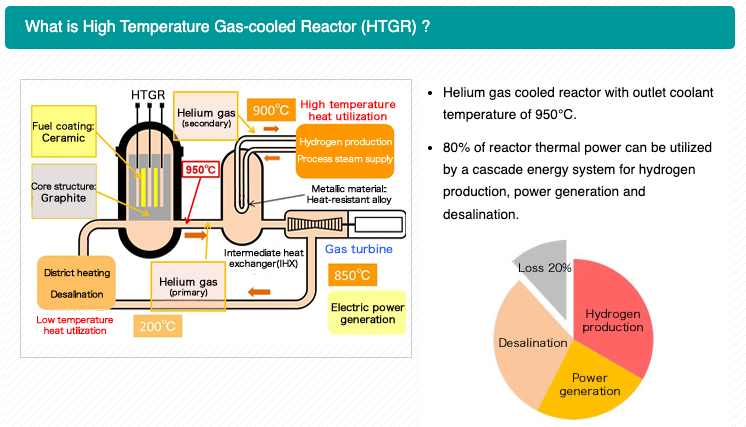
An interesting aspect is that they originally used uranium converted from Thorium. If it works, uranium shortages should be less of a problem. Not considered to be susceptible to a meltdown, therefore safer. But safe under all circumstances, this is scarce. Called HTGR = High Temperature gas reactor. China has developed a variant HTR-PM with this Pebble-bed (stone bed). Should be of Generation IV. The basic requirement is that it allows very high temperatures with cooling by Helium. You get over 900°C. The Chinese HTR-10 prototype is 210MW and modular. Two small reactors are built together. Technical problems and safety are of course a large area that will take time to find out. The reactor uses helium for cooling. Works at high temperature, Up to 950°C. Requires that helium be pumped at high speed, as gas has low heat capacity. Water-cooled reactors have about 30% efficiency, much of the heat produced is not used today, but is lost in heated sea bays. The HTGR reactor has a higher efficiency of 40-55%. The heat can be used in different ways. Common is for district heating. Nuclear power reactors of this type can be placed closer to users inland. The usable power is therefore high, high heat can be used for a number of industrial processes, steel production and not least for the best production of hydrogen at this high temperature. Since there are more ways to extract economy, this reactor type gives a better opportunity to bear high costs. But the cost of building is calculated to be 20% higher than a water-cooled reactor. This is only for electricity production. This reactor type can also be easily built in modules. All in all, this is probably the one that gives the best effect for lower CO2. Spherical fuel is used around the uranium, small balls, so-called pebble-bed, where graphite is the moderator and the balls are surrounded by ceramics. Uranium in the center of the balls is surrounded by ceramics. The ceramics consist of carbon and silicon carbide. Boron carbide is used. The power density is 3MW per cubic meter. A pebble-bed reactor contains 100-1000. x 1000 of these small balls, about 6.7 cm in diameter. Comes in at the top, passes through and then comes out at the bottom. Refueling is therefore constant, you do not have to stop the process for fuel change, as in water-cooled. A moderator slows down the speed of neutrons released during the fission of nuclear fuel. Graphite is used as a moderator, which can be a problem when there is competition for graphite with battery manufacturers. China has the largest amount of graphite in the world. The country has realized its power, and has therefore banned the export of graphite. Graphite is found in quite large quantities in Sweden, such as in the Vittangi mine that is about to be started. For safety, the following applies (quote): "Radionuclides can be kept in the plant through built-in reactor shutdown and core cooling without any equipment or operator action in the event of loss of coolant, accident or station outage". This reactor cools itself if something unforeseen happens. A very interesting aspect for economics is that continuous operation is expected for 60 years. Other reactors such as lead-cooled are expected to operate for 30 years. These have major problems with corrosion. In addition, they were developed in Russia. There is still hope for continued cooperation. This is what Sweden hopes for with SMR.

Japan and nuclear power
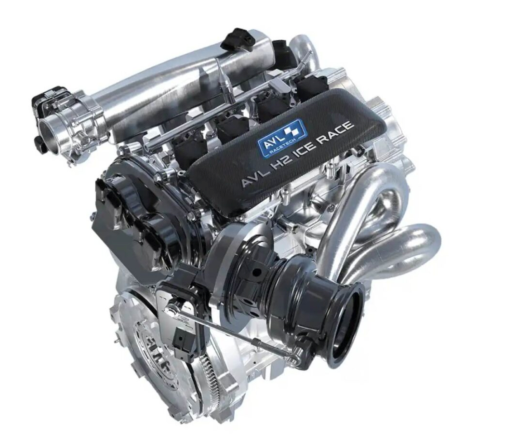
What happened after Fukushima is the worst in the history of nuclear power. Even worse than Chernobyl. Also resulted in Germany shutting down its nuclear power and nuclear power stopping in the entire Western world. Not just in Sweden. The very large Japanese nuclear power program was shut down in 2011. It was like that for a few years. Since 2016, individual reactors have been restarted. They are trying to find a safer solution that is also economical. Russia's attack on Ukraine made fossil energy much more expensive. Sweden probably has reason to see how other countries are now looking ahead. They have such a supportive Swedish attitude. Only used to attack each other in Sweden. As if the crisis was only about Sweden. This is an international crisis that had its peak in 2017-2019. Then it turned around with Russia's attack on Ukraine. For a long time, natural gas was seen internationally as a suitable partner for electricity production. Where wind power and solar cells should represent the renewables. This is unless you have a lot of hydropower like in Sweden. You can quickly shut down a natural gas generator. Much like with hydropower. The hope was to be able to reduce the proportion of natural gas, so that it would eventually have more of a reserve status. That's apparently what the leaders in Germany thought. Natural gas is the least harmful of the fossil fuels. Now they are also starting to think about whether it is possible to restart some nuclear power plants. It seems that HTGR reactors gas-cooled reactors Japan will invest in. Now that it's time for nuclear power 2.0. Also investing in hydrogen in a comprehensive solution where hydrogen can be produced at a relatively low cost using these HTGR reactors. Japan has not really been inclined to create a battery society. Perhaps also in rivalry with China, which is the absolute leader when it comes to batteries. First, Japan tried with cars that have fuel cells that convert the energy between hydrogen and oxygen into electrical energy. This solution has not really gained any acceptance. Batteries for passenger cars will probably be around for a long time. The most interesting thing when it comes to hydrogen and transport is probably that it has been found that hydrogen can be used directly in combustion engines. Hydrogen for trucks, with just a little diesel as a starting agent. Then you will be able to quickly refuel hydrogen for driving perhaps 700-800 kilometers. This is directly in a combustion engine. The technology is very similar to that in a biogas car that has gasoline to start. This is fast refueling, which is essential. This feels reasonable since batteries for trucks are huge devices. BUT does this really work in hard continuous use? Shouldn't engines be adapted more? However, Toyota has now developed a combustion engine for passenger cars that is powered directly by hydrogen. That is, not by a fuel cell and then by electricity. This solution makes refueling quick and easy. It only takes a minute. You can then drive as far with compressed hydrogen as with diesel or gasoline. Normal users can probably accept that they do not have as high an output as the old ones. It's not just Toyota that develops engines for the road. Here's the AVL engine.
The Japanese automotive industry is in a difficult situation if this does not work. They have the best hybrids of regular combustion engines with smaller batteries. After Fukishima, people have been forced to rethink how the whole society should best function, without society being driven by fossil finite energy. The catch with this big investment in hydrogen is the high costs of handling hydrogen. There will be large tanks almost everywhere in society. The hydrogen is compressed to 350-700 bar. 2-3 times higher compression than natural gas. But still large tanks. And there is a fairly high risk of accidents. For it to work, large quantities of hydrogen must be available. You must also try to make the whole thing reasonably safe. And a generally new refueling system in the densely populated country of Japan. HGTR nuclear power provides the solution for large-scale hydrogen production that is needed. Green hydrogen will not be enough. HTGR nuclear power produces electricity, produces fossil-free hydrogen, heats homes and can be used to desalinate seawater If HTGR does not function as an important part of the hydrogen revolution, there is still a need for other things that can be produced by this reactor. It is reasonable that when hydrogen is available at low prices, the need will also exist. HTGR will be central to many industrial processes that currently use fossil fuels. HTGR reactors will certainly be the most widely used nuclear power of all. If only this were realized. If the gen. IV functions work, it means less waste, which is the biggest problem with nuclear power.
China is also in 2023 commercial start of a HTGR nuclear reactors Shidao Bay-1 . This is two SMR and the size of these are 2 x 200MWt. Chinese authorities believe this is the world's first Generation IV reactor. Of course, this with generation IV is absolutely crucial if you really succeed with this. It provides a completely different handling of nuclear, both in terms of uranium mining and waste. Sweden stands a little outside the rest of the world because with their generation III (as often consider themselves as world leading), they consider themselves to have good enough waste management. This does not apply to the rest of the world.
This is how the reputable Swedish Energiforsk writes about fourth-generation nuclear power (quote) :
– Uses fuel significantly more efficiently than today's nuclear power.
– Does not leave behind long-lived waste.
– Is designed so that it cannot cause accidents with serious consequences. That is, there must be no scenarios where errors in the plant or external influences lead to radioactive substances being spread into the environment.
– The system as a whole – the reactors and the fuel cycle plants should be economically competitive compared to today's nuclear power and other forms of energy.
– The fuel cycle is designed so that it is uninteresting to divert fissile material for weapons production. This is done by ensuring that uranium and plutonium are always mixed with other substances. The quality of the fissile material is then too poor to manufacture weapons, but fully sufficient to operate the reactors.
Leif Lindblom, Fil. Kand. info@leiflindblom.se


Comments